Friday, 27 April 2012

To the Ladies


My uncle walking with his son!


Lady Mary Chudleigh writes a testament, To The Ladies, telling women to "value [themselves], and men despise: You must be proud, if you'll be wise," meaning women should reject marriage if they value themselves.  She was a very intellectual woman, but was bitter because she was married at seventeen-years-old and lived in the countryside raising three children for the rest of her life.  One day I hope to be married and have children of my own once I am in my late twenties and have started my career.  We spoke in class about how women have to sacrifice career for family, but men can have both, and I agree with this to some extent.  Primarily, it is women who opt to care for their children in their infant years, but more and more these days, men are taking paternity leave so they can be the caregivers to their babies, which I think is amazing.  It takes two to tango, so I believe it should take both the mother and father to look after their young baby, as well.  After a baby has reached toddler years and is able to start playschool or preschool, I don't find anything wrong with a mother working, at least part time, or a home-based business would suffice.  I think women have fallen into the role of stay-at-home mother, which I am all for if that's what a woman chooses, but I like the changing times where there are now stay-at-home fathers, too!  It makes me happy when I see a father pushing a stroller down the street with his children riding along; proving that he's helping with the child-raising, as well, and it's not entirely left up to the mother these days!

Tuesday, 24 April 2012

The Trivial Delights of Mankind


We studied the poem, The Rape of the Lock, by Alexander Pope, in which a man cuts off a lock of hair from a woman's head and they have a big fight over it, and, in the end, the hair is immortalized in the stars by the Muse.  The theme of this poem is what mighty contests rise from trivial things, and Pope is attacking the shallow values and misplaced priorites of the upper classes in his mock epic.  Well-off people spend far too much time worrying about insignificant things and spend too much money on items that they don't neccessarily need, but purchase them just because they want them, such as Ipods, cell phones, laptops, and other electronic devices.  They spend money to redecorate and update their already lavishly furnished homes with expensive items that they won't actually use but are "just for show".  People, both nowadays and in previous times, spend too much time and money worrying about all the wrong things; they should really be worrying about all the poverty-stricken and homeless and sick people, rather than the little lock of hair that was cut from their head that will, in time, grow back, or the cell phone that's twice as much money as any other but this one "looks nicer".

Friday, 16 March 2012

To My Parents


During the King Lear unit, we spoke a lot about what we, as children and students, owe our parents, if anything.  In King Lear, Lear's daughters, Regan and Goneril, profess their love to him to gain his land, but later betray him and they feel they don't owe him anything.  But Cordelia, Lear's third daughter, refuses to tell him how much she loves him like her sisters do for she won't spew false words, and Lear banishes her, but, in the end, the King realizes how much she really does love him and what they owe each other.  I feel I owe my parents a lot, but maybe not quite everything.  They are the reason I was born and the reason I have turned out the way I have, for which I am thankful, but, somedays, I wish things had been different in my sheltered upbringing.  Overall though,I love my parents and owe them a lot for all the things they have done for my brother and I over the years.

Thursday, 8 March 2012

Control Freak

We discussed the topic of people ruling over or controlling others, and I feel that, in some situations, people do have the right to rule over others.  If there were no rulers, the whole world would fall into utter chaos.  I believe people have the right to be respected when they request others to do something, within reason.  Leaders of countries, along with police and even teachers, have the right to control others to some extent, but not to dictate or abuse their powers.  Without some people controlling others, there would be no order to the world or organization, and our sophisticated cultures would break down.  I believe there needs to be some authoritative figures, but not dictators or complete controllers.  People still have free will, but most people will follow orders anyways out of respect, knowledge of consequences, and wanting to do the right thing for themselves, their community, and their world.

Friday, 2 March 2012

Paradise is Yet to be Lost


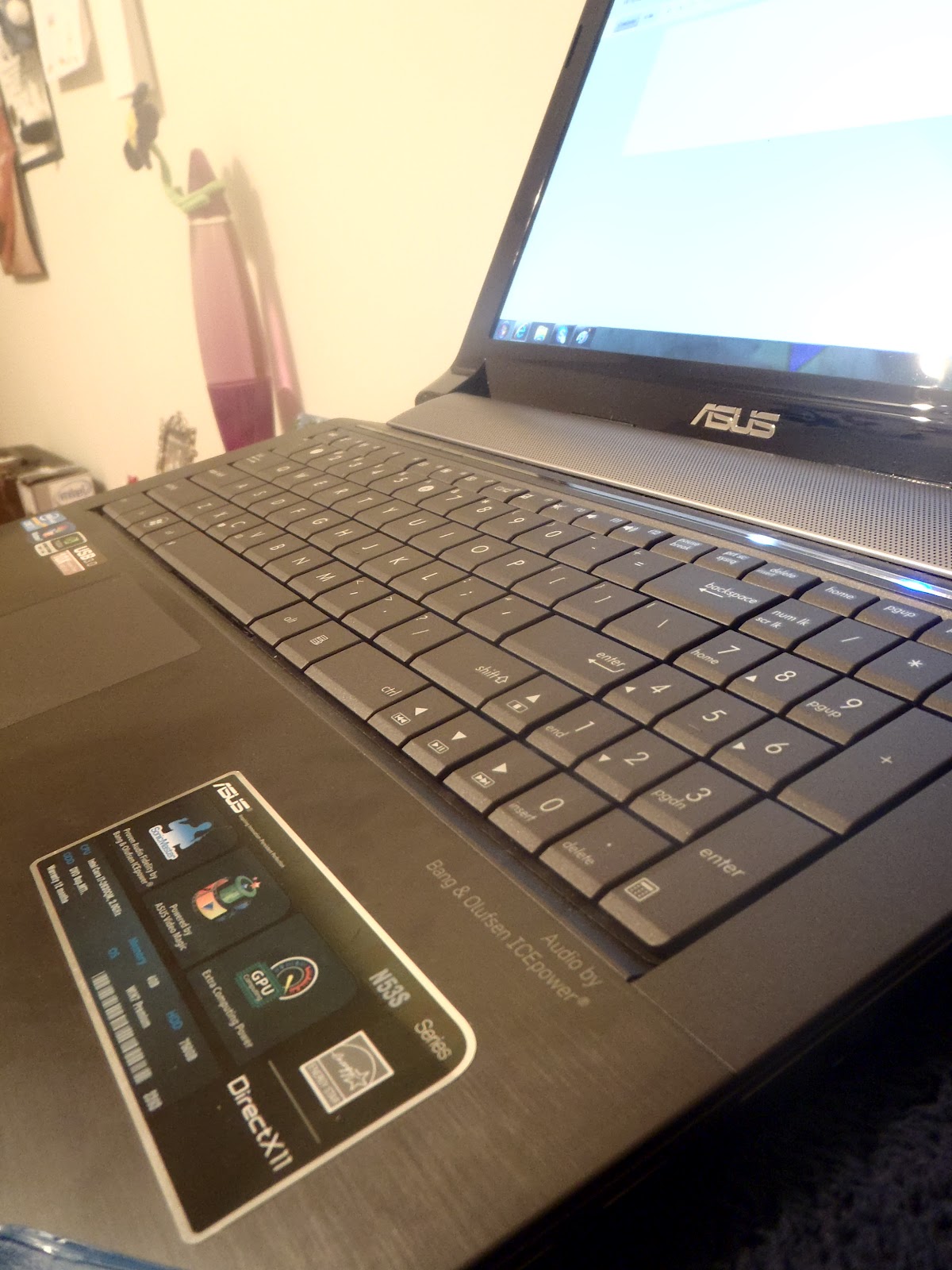
     This picture of an angel praying with a pretty flower reminds me of Paradise Lost by John Milton.  This symbol of praying and being devout beside something so elegant as a freshly-opened flower is like Heaven and the Garden of Eden.  In Paradise Lost, it tells of Satan who fell from Heaven and Adam and Eve who fell from the Garden of Eden.  All three were cast from their paradises after making choices with their free will.  I am glad for free will, to allow me to make my own choices.  Although there could be such thing as Fate, I believe we also help to control our destinies and that we have the power to change our future if we try very hard.  As we wrote in class in a free write about Fate and free will, I am starting to notice more events occuring around me that seem to be Fate.  The other day as I was going to meet some friends to go running by Okanagan Lake, my dad convinced me to quickly go over to London Drugs to look at a laptop.  We went in for about five minutes, and then he walked home and I drove down main street and was hit by an elderly lady trying to change lanes without shoulder checking.  This seems to me like something intended by Fate, for whatever reason, as I had already made plans to go running and did not, in the slightest, feel like going to the store, and yet, there I was with a scratched and dented car, talking to two elderly women who had just been going to the car wash.  Some things may happen by mere chance; some things happen because of our choices; others happen because of Fate.

Wednesday, 29 February 2012

No Man is an Island


     In Meditation 17, John Donne writes that "no man is an island entire of itself; every man is a piece of the continent, a part of the main"  I can really connect with this essay as I entirely agree that no person is entirely alone in life and that if something happens to one person, it effects everyone else, as well.  I have been fortunate enough in my life to have been blessed with very close friends and the people I work with have become a family to me.  I am thankful to have them all as I would not be able to be an island; I definitely need to be part of the continent.

Until Death Take Me


     In Holy Sonnet 6, John Donne is talking to Death and mocking it.  He says that "death shall be no more; Death thou shalt die" which is a paradox as death cannot die, and yet if you go to Heaven where there is no death, then death is gone and has died, so death shall die.  This passage really boggles my mind, and yet, at the same time, I understand it.  It's reassuring, in a sense, that after we die, we won't have to worry or even think about Death anymore for there will be no more Death.  "And soonest our best men with thee do go, rest of their bones, and soul's delivery" is the passage I find the saddest of the sonnet in which it speaks of the best people usually dying first.  I find this so true, and so sad, as it is often young, good people who fall prey to Death's friend, Sickness, such as cancer.  My grandmother on my father's side passed away from lung and breast cancer when I was just four-years-old; she was far too young to die.  One of my childhood friends died of cancer a couple years ago when she was just a young teenager.  I had fallen out of touch with her, but she was always so nice and was too young to have been taken by Death.